
TaffyGo
What if your browser could help with the work?
Product and source · . In development at Matterward Labs.
Where to today?
The new tab from TaffyGo: original artwork, one address box, and the browser tools you use every day.
Explore TaffyGo ↗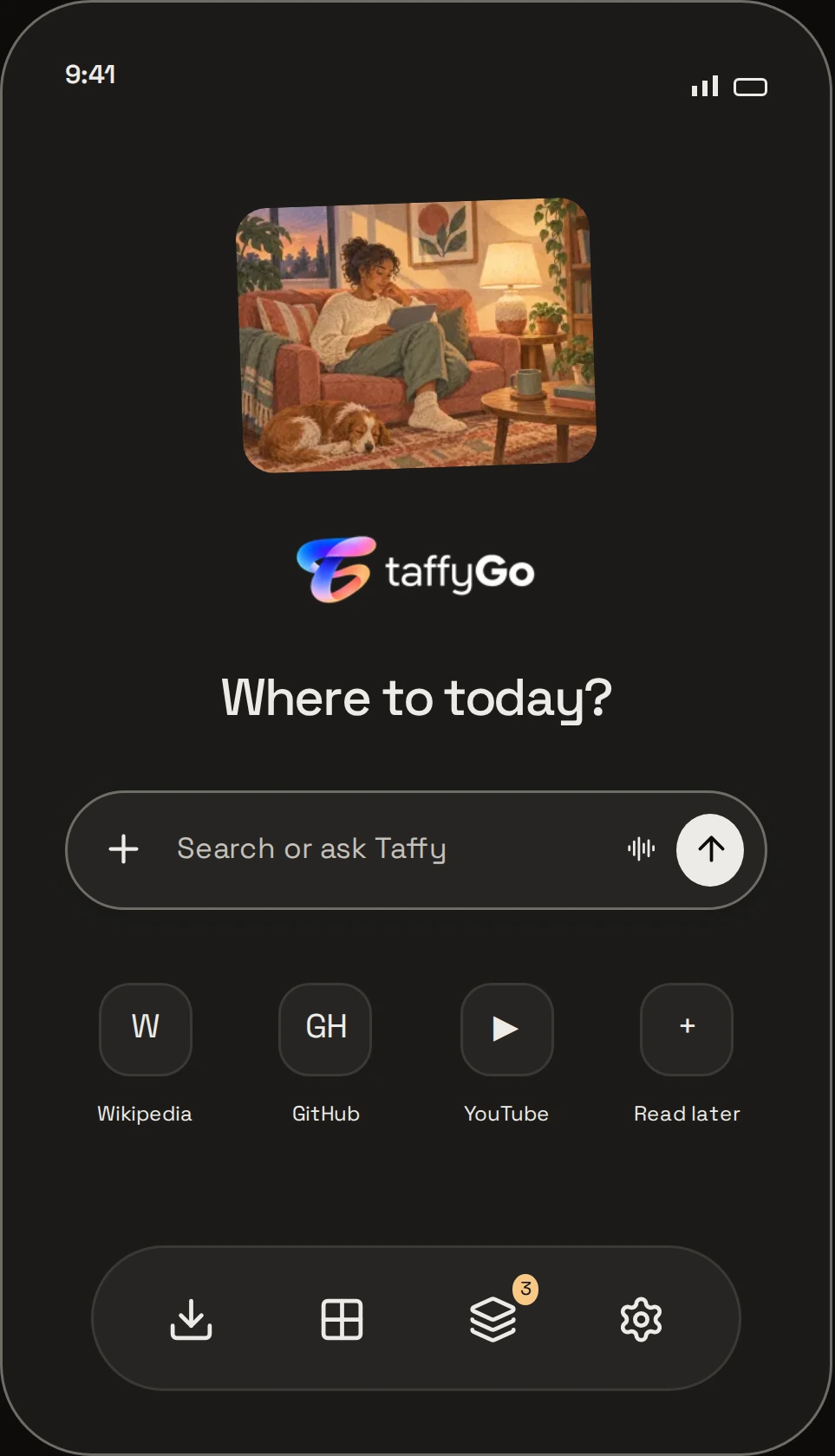
 Watch the film
A lot of useful work starts in a browser and ends somewhere else. Read a few pages. Compare the details. Copy a table. Resize a photo. Go back to the form. TaffyGo starts with that familiar sequence and asks how much of it could stay in one place.
I’m building TaffyGo at Matterward Labs: an AI-native Chromium browser for Android, with one assistant called Taffy. Ordinary browsing remains the foundation. Tabs, saved pages, downloads, and ad and tracker blocking belong alongside the assistant.
A browser first
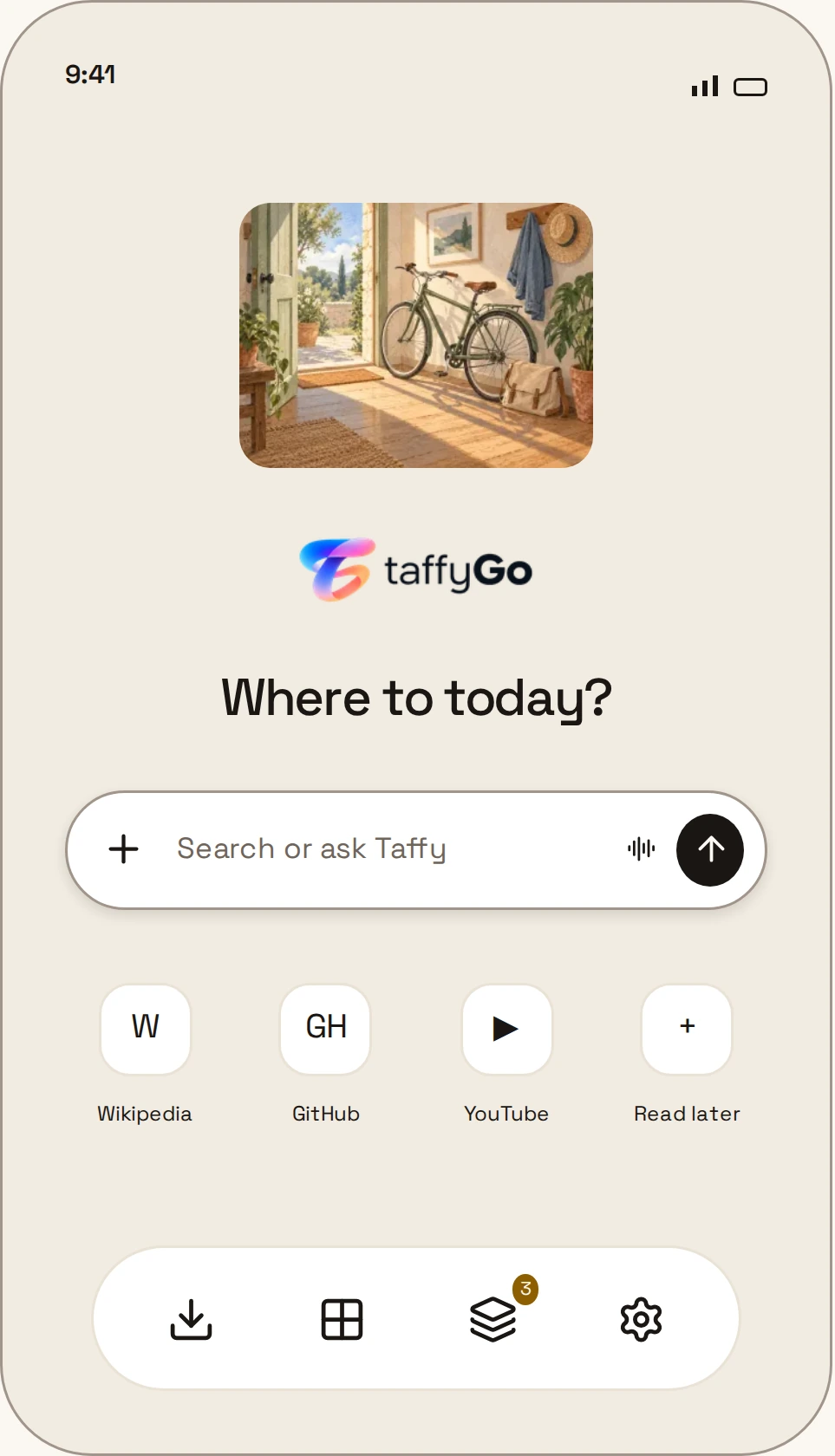
The new tab is a quiet starting point: original artwork, one address box, and the everyday browser controls. Search the web, ask about a page, or hand Taffy a task. Those are different intentions, and the interface should keep the distinction understandable.
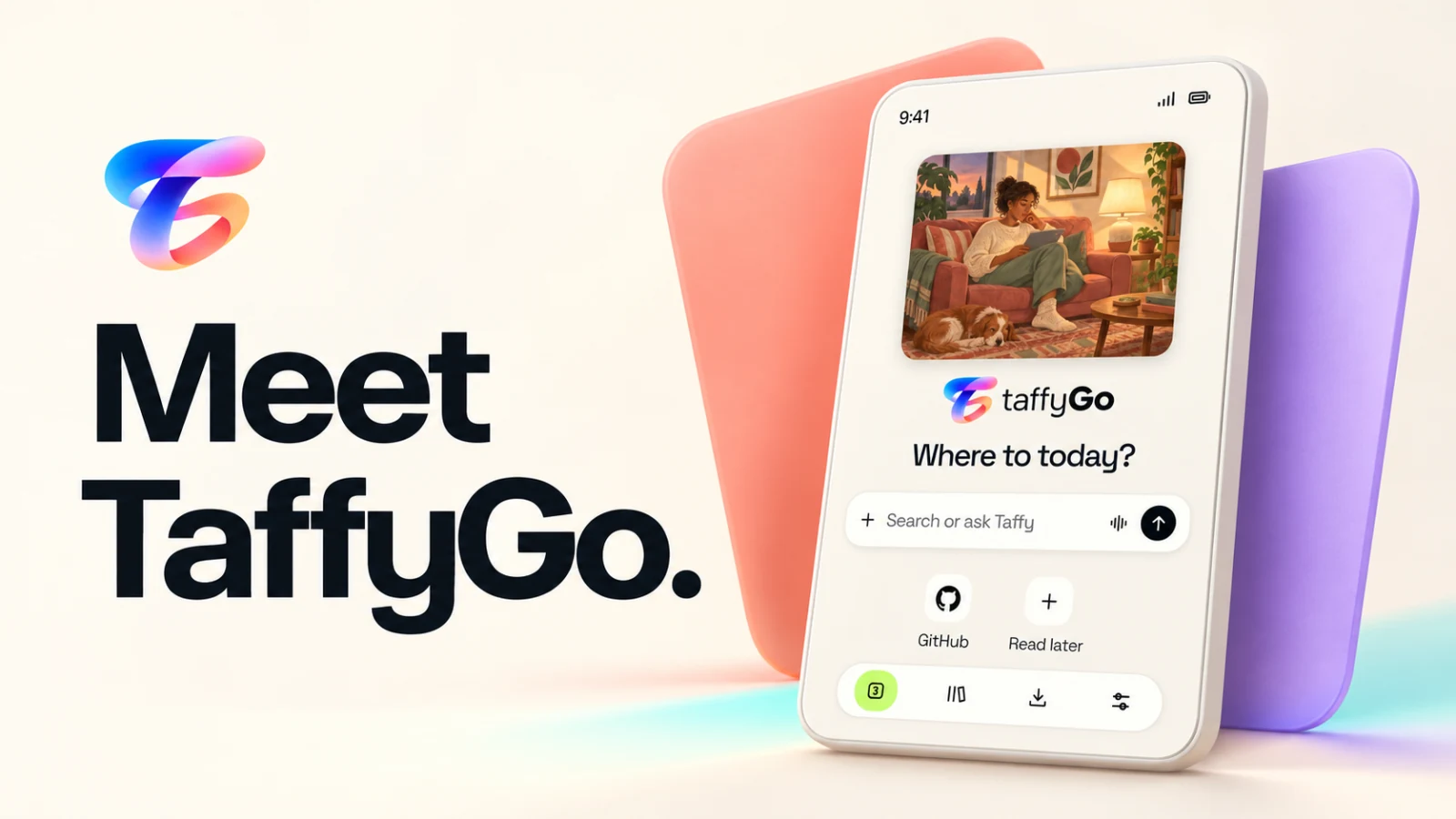
The light and dark surfaces above are rendered from the same new-tab design used on the TaffyGo website. The film follows the broader product direction, from browsing and research to file preparation and developer integrations.
Keep the work close to the page
One example is a form that accepts a photo under 200 KB. The useful action is a sequence: take a copy, resize and compress it on the phone, attach the result, then let the person review the form before submitting. The original file stays untouched.
The same idea applies to research. Bring information from selected pages together, compare products and reviews, and keep the sources beside the answer. A useful result should be something a person can inspect, save and return to.
Local tools, explicit control
File processing runs on the device. Requests to an AI provider are a separate choice. TaffyGo lets people connect their preferred provider, while keeping task progress and approvals visible in the browser.
Under the interface is Chromium, Android UI, and a sandboxed Rust core. The engineering work is making those boundaries behave consistently when pages change, files are large, or a task needs the person to take over.
Build the browser with us
TaffyGo’s first-party source is licensed under the Mozilla Public License 2.0. The product is still being built and verified. Developers, designers, translators and testers are welcome to help shape it.
Visit taffygo.com for the product story and contribution information. The launch film above brings the direction together in under two minutes.
 Talk to me on LinkedIn